
Welcome to the off-street section of your hiking adventure along the Historic Mine Route. If you are coming from the Museum, you are entering a multi-use trail system, where you may encounter other hikers, mountain bikers and wildlife. Please use the speaker on your phone, rather than earphones or earbuds, so that you can hear others on the trail, especially bikers. If you are wearing headphones, please keep the volume low enough to properly hear your surroundings. If you encounter a moose, back away slowly!
Donald Roll co-chairs The Friends of Ski Mountain Mining History, a committee of the Park City Historical Society & Museum, which has raised funds to preserve and protect many of the mining relics you’ll see on this hike.
On behalf of The Park City Museum, I’d like to welcome you to the Historic Mine Route.
We’re delighted to share the knowledge about Park City’s mining history in the open-air museum of the Mining District itself. We hope you will enjoy all that you see and will come to share the joy we feel in the presence of the resilient men and women who founded Park City and created the vibrant culture that continues to this day. Have a great hike. It’s a great way to experience quintessential Park City.
This is part of the 7-mile hike loop; whether or not you hike the whole loop is up to you. It is a 3-mile trek up Treasure Hill from here to the Silver King Mine, which should take the average hiker around 90 minutes. Don’t worry if you do some huffing and puffing in our thin air; that’s to be expected. From there you can opt to ride the Town or Payday Express Lift back down.
This mountainside was principally developed by the Silver King Mining Company and later by the Silver King Coalition Mines. The Silver King, as it was called, was formed in 1892 by Thomas Kearns and his partner David Keith, among others.
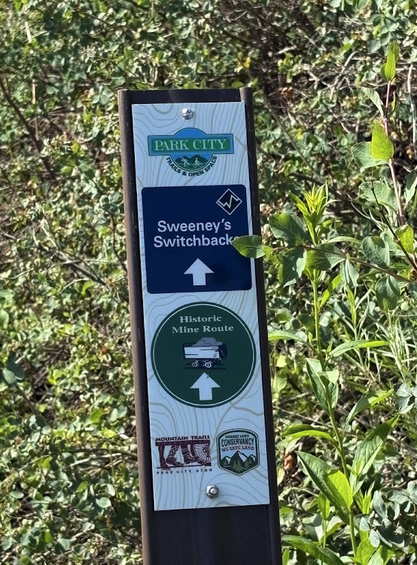
Here you’ll start on Sweeney’s Switchbacks trail and will make turns onto several other named trails, which will be identified by wayfinding markers that look like the example shown in the photo section.
As you head up the trail, look for one of our interpretive signs on the left that will describe the operation of the Silver King Aerial Tram.