
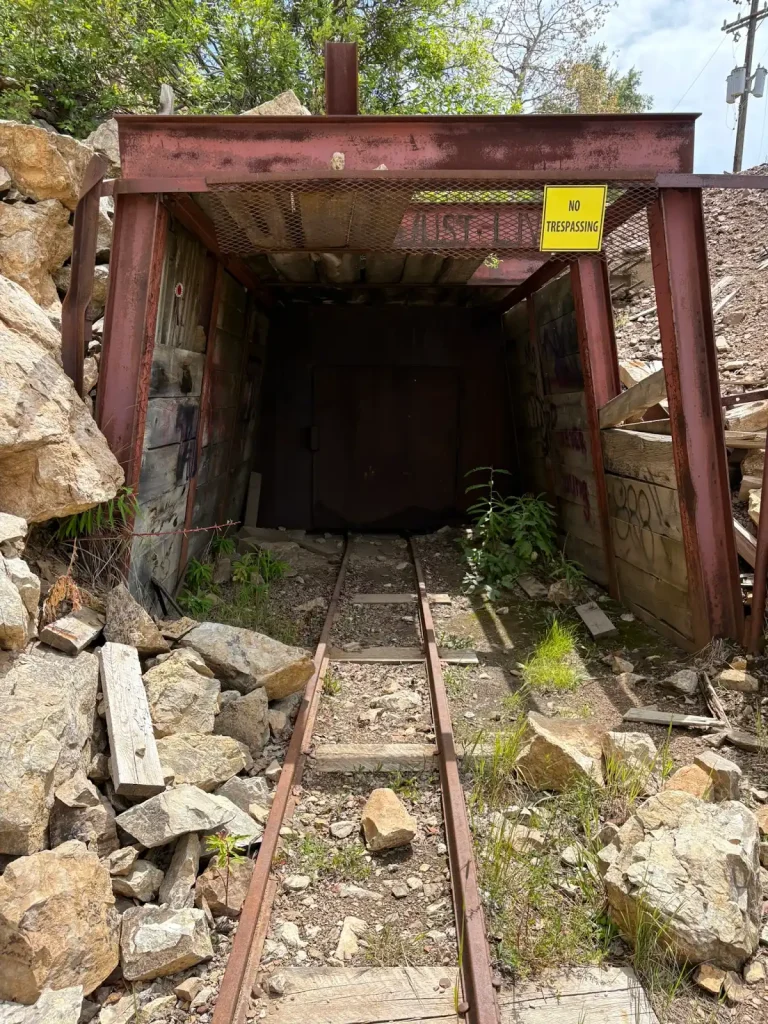
You’re standing at the Ontario No. 1 Drain Tunnel complex. Opened in 1881, the tunnel extends more than 6,300 feet up the canyon to the Ontario No. 3 shaft, the brown industrial structure visible above on Marsac Avenue. Walk to the fenced tunnel portal below and feel the cool breeze—it’s almost as if the mine is breathing.
Mark Danninger is a modern mining engineer with a passion for historical technologies.
MARK DANNINGER:
Drain tunnels were really the best way to get huge amounts of water out of a mine so work could keep going.
But building one wasn’t simple or cheap. You’d only see a drain tunnel in places where the ore was valuable enough to make the investment worthwhile. Mining companies often teamed up to pay for them, since everyone benefited from keeping the mines dry. Mills also needed a steady supply of water to process the ore, so they were usually built right at the tunnel’s exit. And as miners dug deeper, they had to keep cutting new tunnels even further down to stay ahead of the water.
Ontario No. 1 no longer drains water because it was replaced by the deeper Ontario No. 2 drain tunnel, opened in 1888. No. 2 connected the mine to a portal above the former town of Keetley, about three miles east, now submerged beneath Jordanelle Reservoir. Before No. 2 was built, a massive Cornish Pump at the Ontario No. 3 shaft lifted water from 1,000 feet to the 600-foot level, where it could flow out through tunnel No. 1. The pump cost more than $250,000 in the 1880s, had a 75-ton flywheel 30 feet in diameter, and operated for only four years—evidence of how profitable the Ontario Mine was.
The Ontario drain tunnels were later extended to also drain the Daly and Daly West mines. Today, No. 2 supplies up to 90% of the water drawn for local use, with the rest released to Jordanelle Reservoir east of Deer Valley Resort.
These tunnels carried more than water: ore moved through them, and miners used them to reach underground work areas. From here, ore could be shipped to smelters in Salt Lake City. You can still see remnants of the High Line Railhead, along with foundations of the Ontario Mill and the Daly-Judge Aerial Tram Transfer Station above. The runaway truck ramp on Marsac Avenue sits atop the old Ontario Mill site.
When you’re ready, cross Marsac Avenue with care, minding the traffic, to return to Main Street and the Museum or to continue the hike up the canyon.